Ever wondered what causes the phases of the moon?
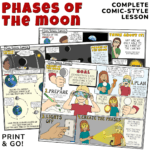
It’s not a shadow, and it’s not the Earth blocking the sun. Help your learners understand what the moon phases are with more than your basic worksheet. The real answer is actually way cooler, and this science comic makes it click in just one page.
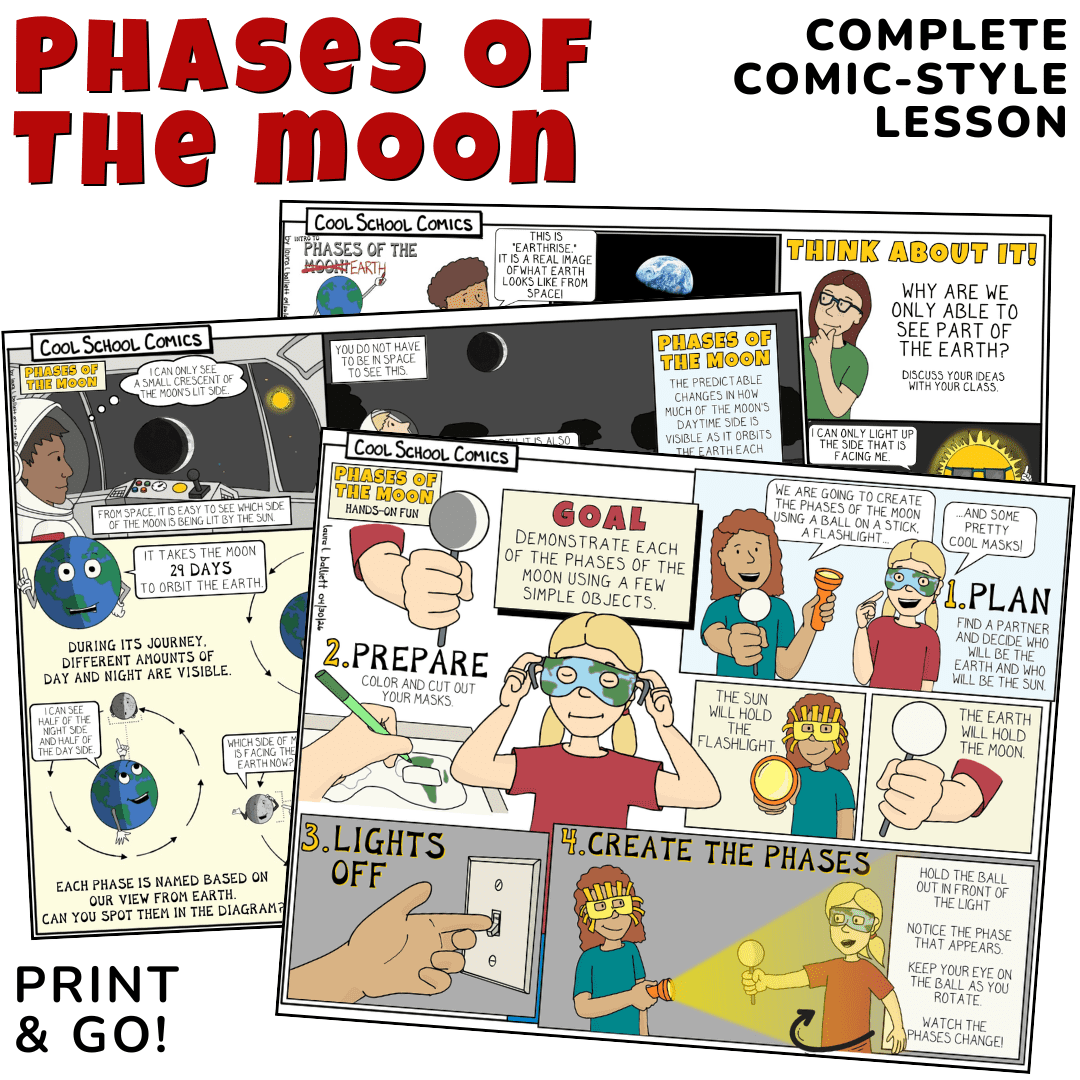
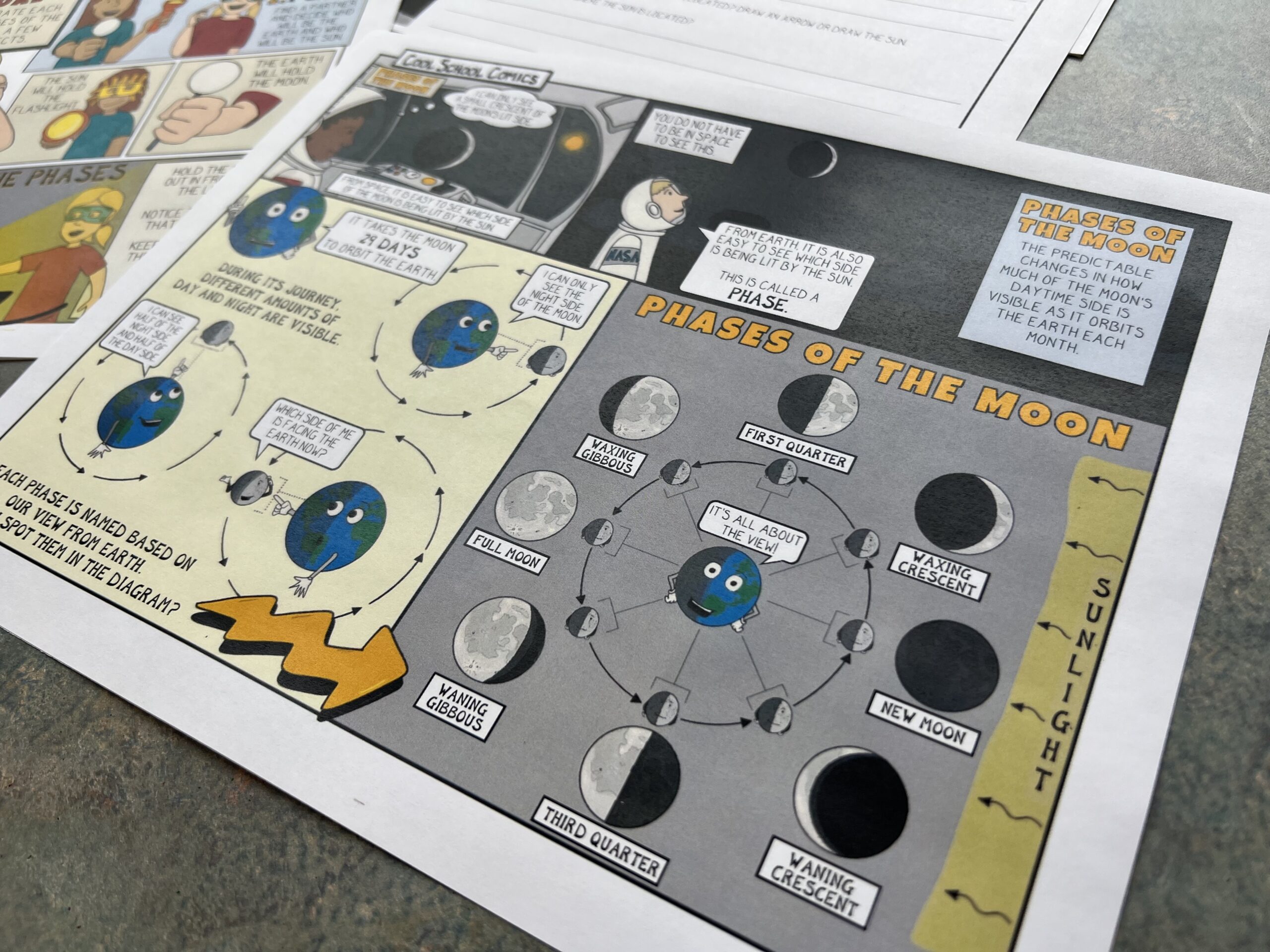
This moon phases comic uses NASA’s real Earthrise photograph, taken from the moon’s surface during Apollo 8, to flip the perspective entirely. When students see Earth appearing as a “phase” from space, the concept suddenly makes sense: moon phases are just day and night on the moon, as seen from Earth.
This science comic strip is a perfect visual entry point for any space unit. Whether you’re introducing the topic or helping students who are still fuzzy on the concept, this one-pager builds the foundational understanding that makes everything else easier to teach.
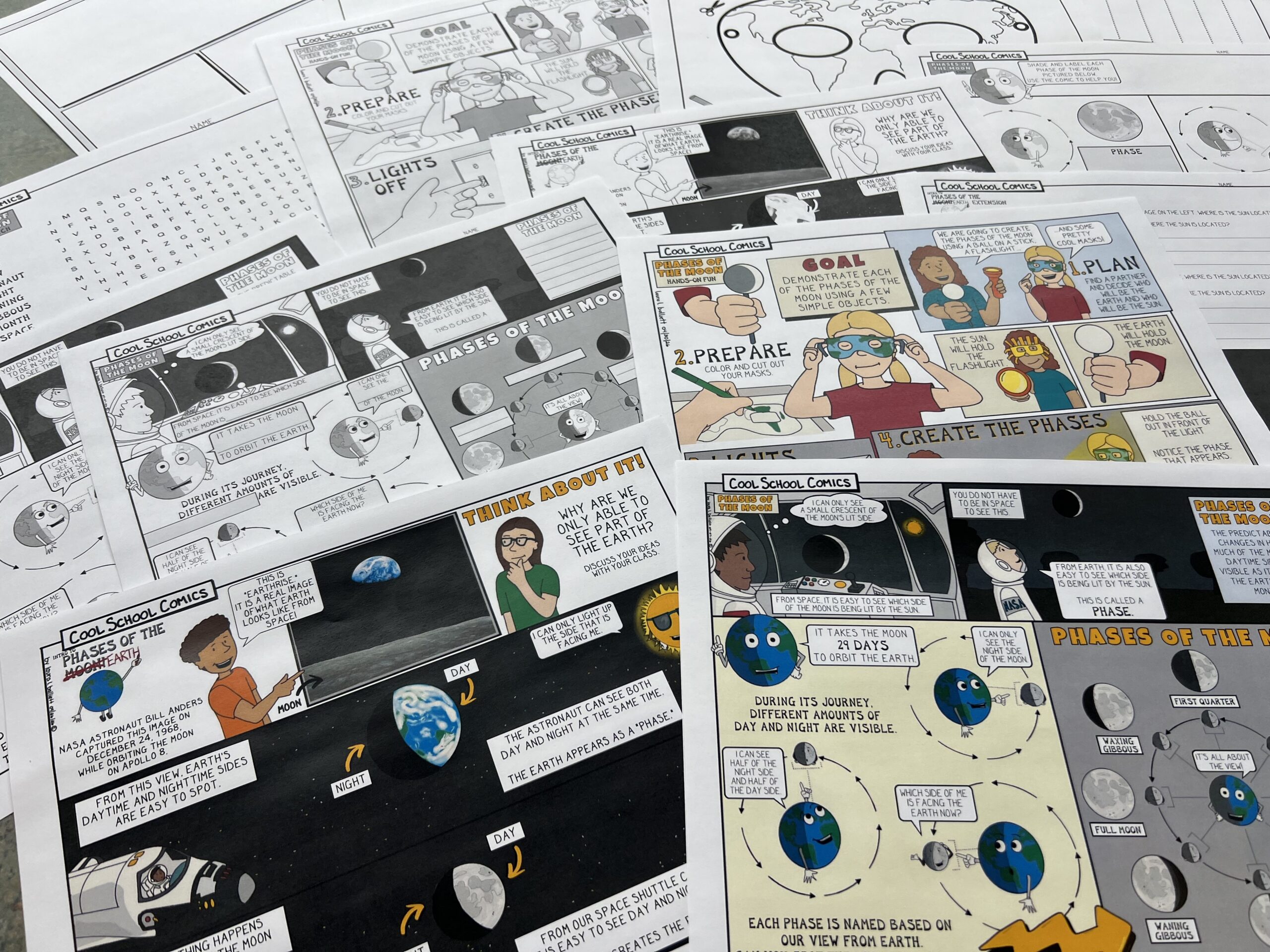
This resource includes:
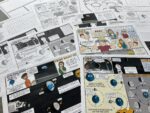
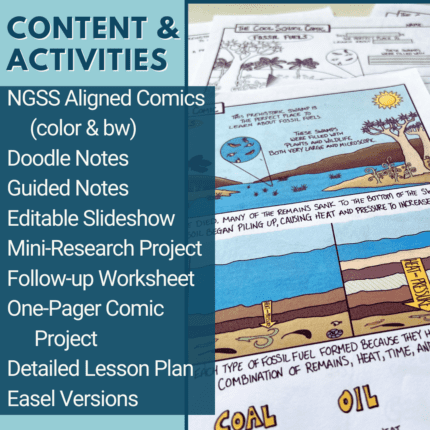
- 3 Full-color comics
- Black-line versions of the comics (great for coloring or low-ink printing)
- Moon phases worksheet 1 – students examine the Earthrise image and an illustrated night sky scene, then identify where the sun is located and explain their thinking
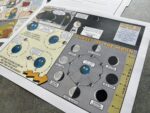
- Moon phases worksheet 2 – students examine different positions of the Earth and the moon and determine which phase they are seeing
- Guided Notes
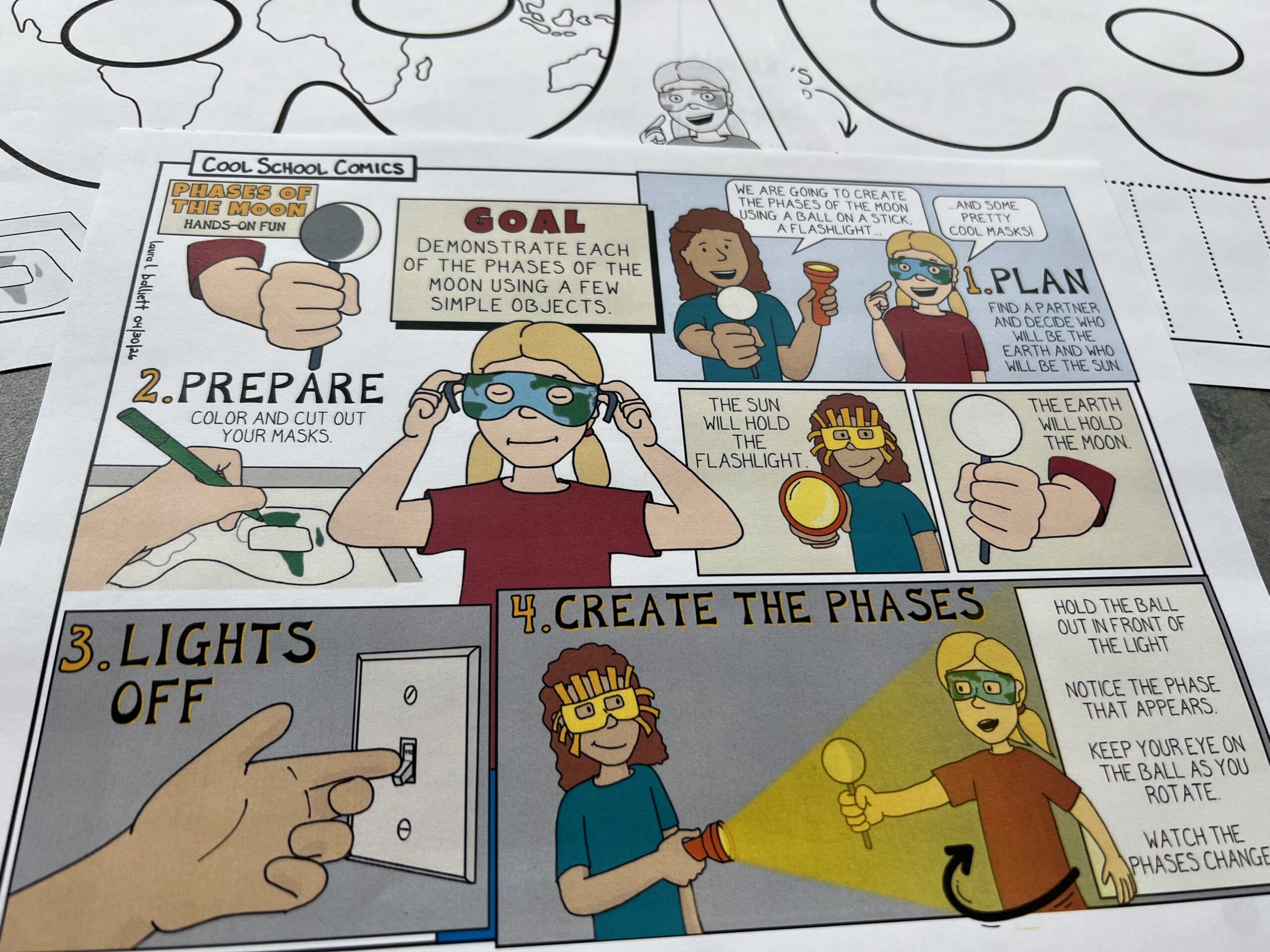
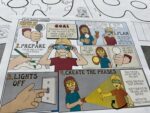
- Hands-on Moon Phases Modeling Activity (visual instructions)
- Animated Google Slideshow (editable and shareable)
- Recording sheet with follow-up questions
- Detailed lesson plan
- Word Search
No more blank stares when you ask what causes the phases of the moon. This comic gives students a visual model they’ll actually remember.
Perfect for grades 6–8, homeschool families, struggling readers, ELL students, and anyone who learns better through visuals than textbooks.
Author’s Note
When I was a teacher, my students struggled to grasp this concept. The diagrams available always depicted the moon revolving around the Earth, but the point of view was always as though we were looking from a distant point in space. This made it challenging for students to understand the perspective. This Earthrise photograph clarifies the concept because it shows Earth in both day and night, which is exactly what we see when we look up at the moon.
Check out the blog to learn more about how to use this mini science lesson plan


Reviews
There are no reviews yet.