Blog
Why Comics Work for Struggling Science Readers

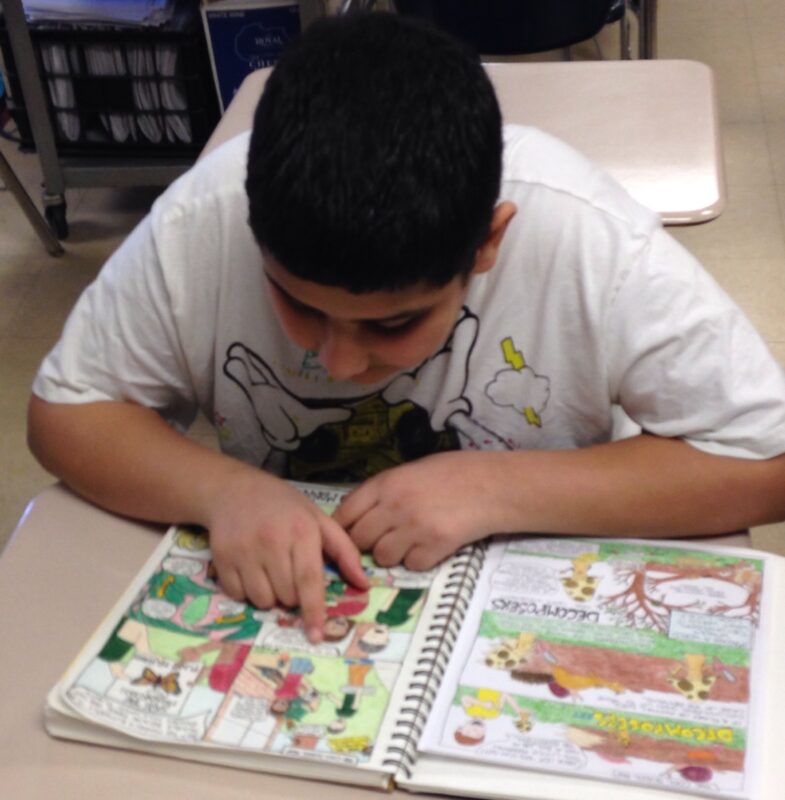
Why Comics Work for Struggling Science Readers (And What the Research Says)
If you’ve ever watched a student shut down the moment a science textbook lands on their desk, you already know the problem. Many learners today are presented with a lengthy paragraph and see only a wall of words. The response: immediate shutdown. Unfamiliar vocabulary and abstract concepts remain a mystery because these learners find them too intimidating.
Reading science can seem extremely challenging for students who are already working hard just to decode words on a page.
But there is a solution, and it is backed by a growing body of research. Visual formats like comics and graphic novels are genuinely effective tools for struggling readers, not just a workaround.
Here’s why.
Science Text Is Especially Hard for Struggling Readers
Before we talk about solutions, it helps to understand the root of the problem. Science content has a tendency to introduce multiple new vocabulary words per page, requires understanding of abstract processes (think: the water cycle or how sound waves travel), and asks students to hold several ideas in mind at once. This can place a high “cognitive load” on readers.
For a student who is already struggling to decode text, that extra cognitive demand can be the breaking point. Most just quit and claim it is boring. For those who do try, they spend so much mental energy on reading that there’s little left for understanding.
This is true for struggling readers across the board, be it English language learners, at-risk youth, students with attention challenges, and everyone in between.

What the Research Says About Visual Learning
Decades of research on visual literacy and comics in classrooms result in some solid findings:
Visuals Make Learning Easier
When images and text work together, readers do not have to work as hard to understand new concepts. Images do a lot of the heavy lifting for them. They provide context, illustrate concepts, and help readers visualize processes they would otherwise have to imagine from words alone.
Research published in the MinneTESOL Journal found that students showed increased comprehension and more accurate text recall when provided with visual scaffolding.
Neuroscience Backs the Benefits of Comics
Dual coding theory, a well-established cognitive science framework, states that combining verbal and pictorial information enhances memory retention due to the interconnected nature of these two systems. This means the brain processes verbal and visual information through separate channels, and that activating both channels at once leads to stronger memory and understanding. Comics do exactly that when they combine images and text. Both systems engage simultaneously.
Graphic Formats Motivate Reluctant Readers
Research consistently shows that students who resist traditional texts will often engage willingly with visual formats. As cartoonist and author Judd Winick put it, graphic novels allow reluctant readers to “slide into the story without as much of the heavy lifting as prose might require.”
One study found that graphic novels positively affected the intrinsic motivation, vocabulary, and comprehension of seventh graders. This might be the most important finding for today’s classroom teachers.
Benefits for English Language Learners
Research suggests that the use of visuals in comic formats helps English language learners engage and better understand content. This is because visuals are not language-dependent in the same way text is. This is why the emergency evacuation brochure on airplanes relies so heavily on images. Images have the power to deliver information across language barriers.
Comics improve accessibility and independence. Students struggling with reading the English language are able to work through content without having to ask for help from their teacher.
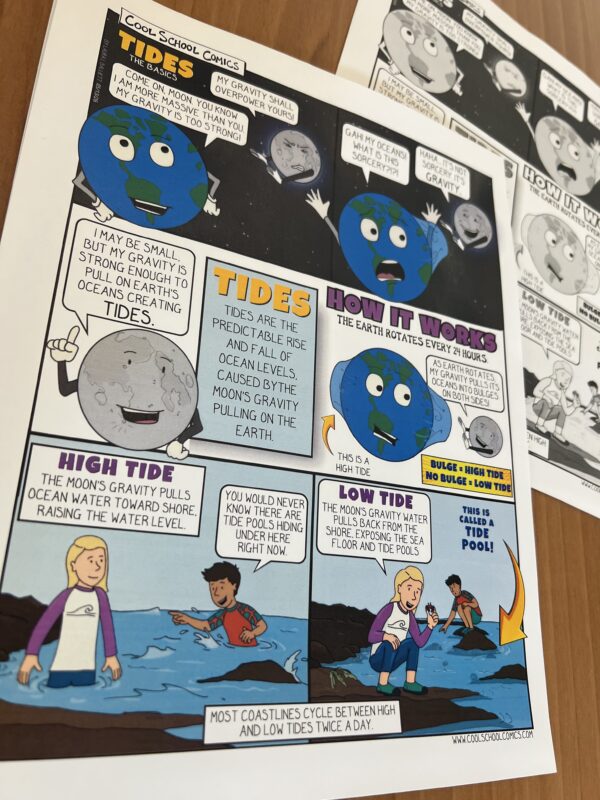
Comics Improve Accessibility
Despite how beneficial comics can be for today’s readers, they still tend to have a bad reputation. One of the most common misconceptions about comics in the classroom is that they are a dumbed-down alternative for kids who can’t handle “real” content, but research and teacher experience suggest otherwise.
A well-designed science comic still teaches the same rigorous content. It still introduces scientific vocabulary. It still aligns with standards. What it does differently is reduce the barrier to entry, giving students a foothold in the content so they can then engage with it more deeply.
Comics reduce intimidation and rope readers in. When a student wants to read the content, they retain the information better.
How Teachers Use Comics in Their Classrooms
Many teachers are already using and finding success with comics in their science classrooms. Here’s how teachers typically use visual science resources effectively:
- Introducing a new unit– comics can be used to ignite curiosity about a new topic
- Fun review tool– in my own classroom, I used comics to review content before spring testing
- Differentiation for struggling readers and ELL students
- As a take-home reinforcement for students who need extra help
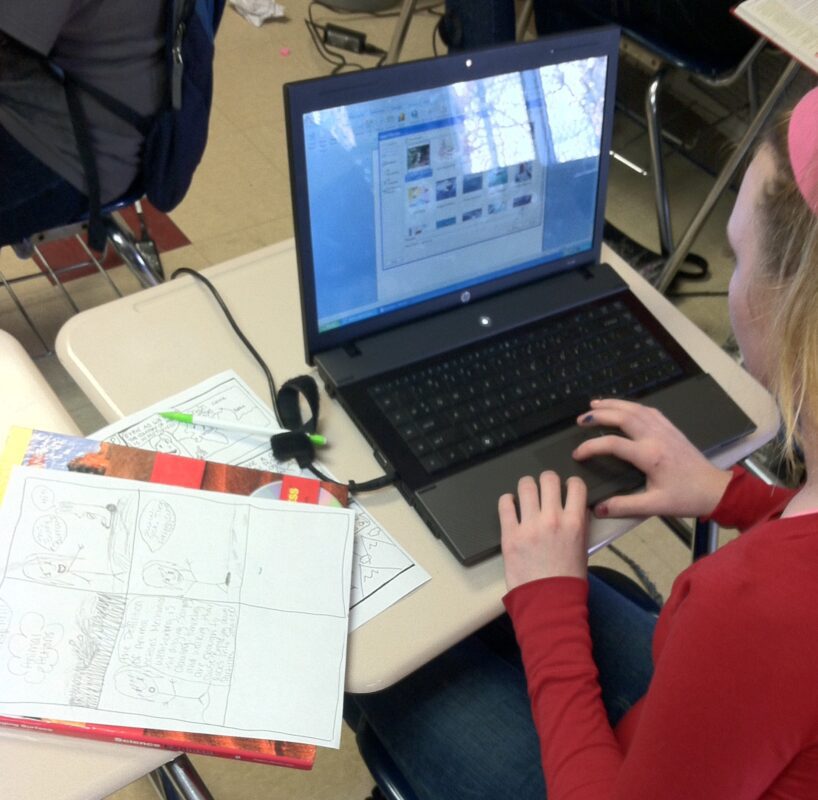
Cool School Comics: Built for This
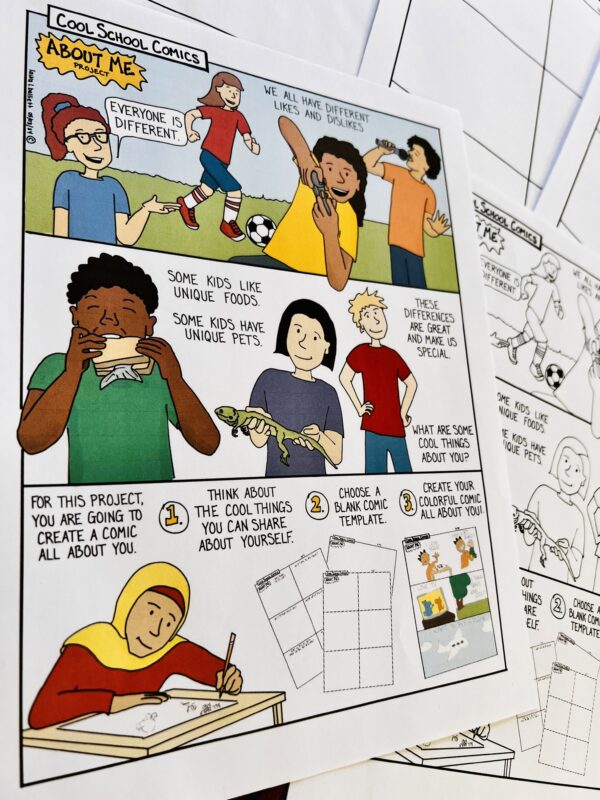
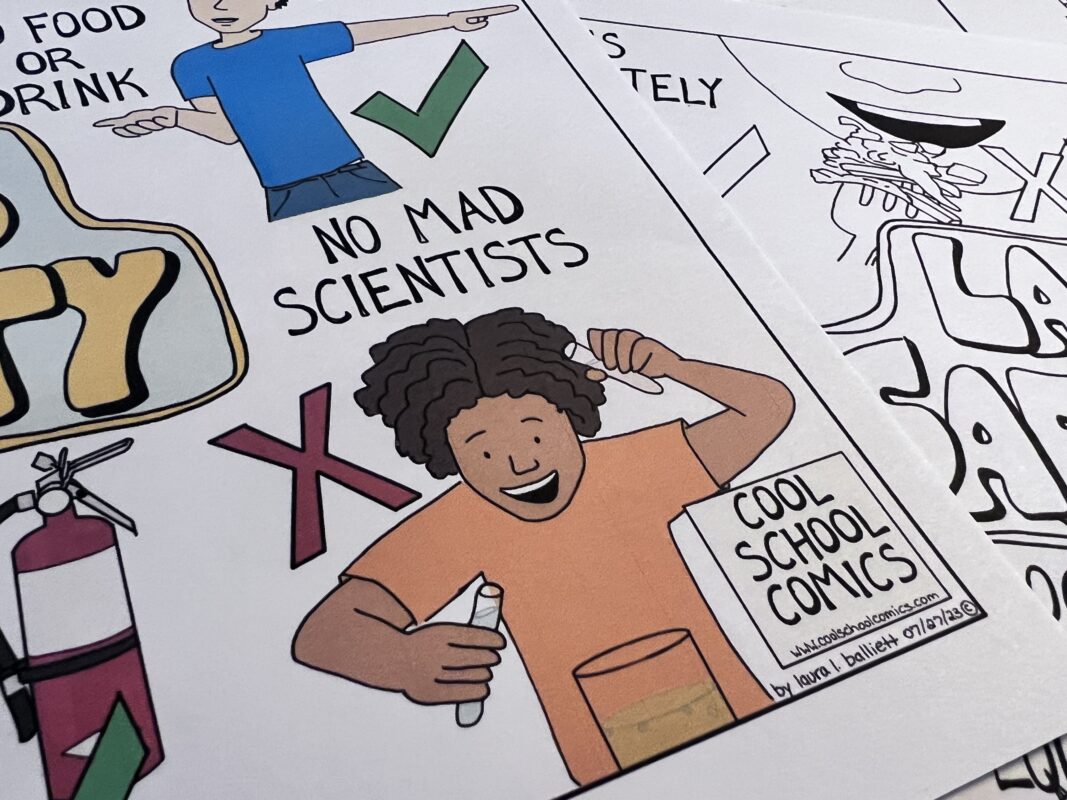
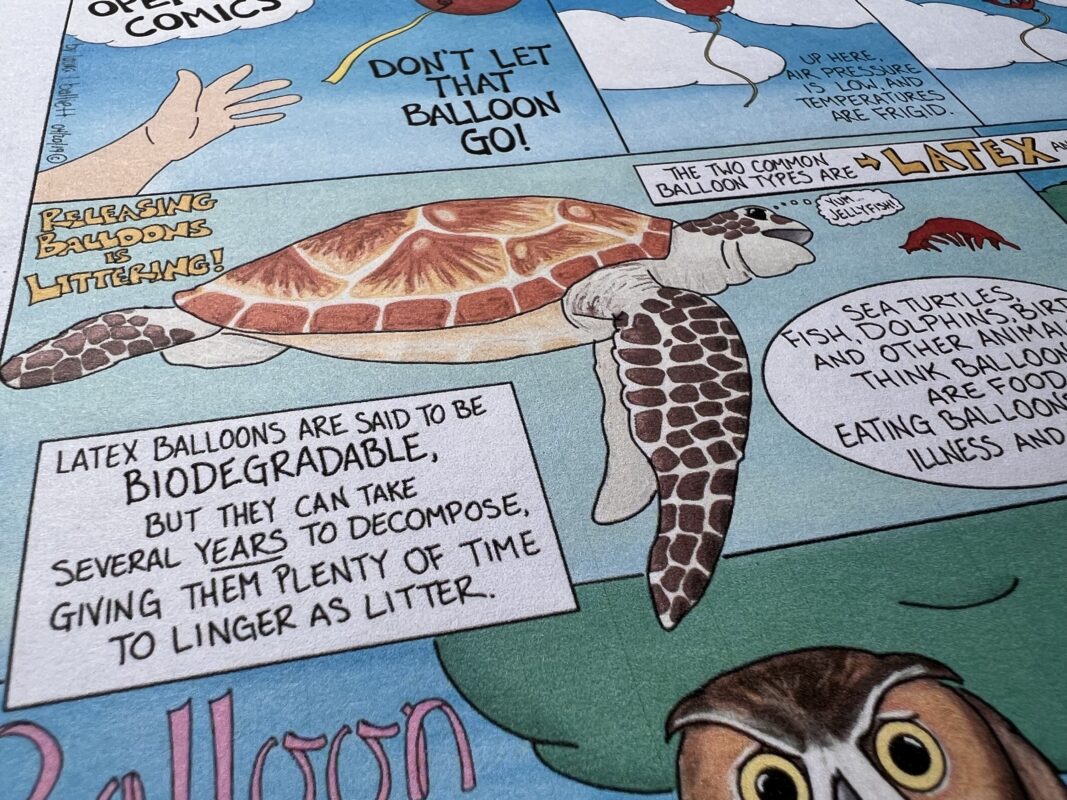
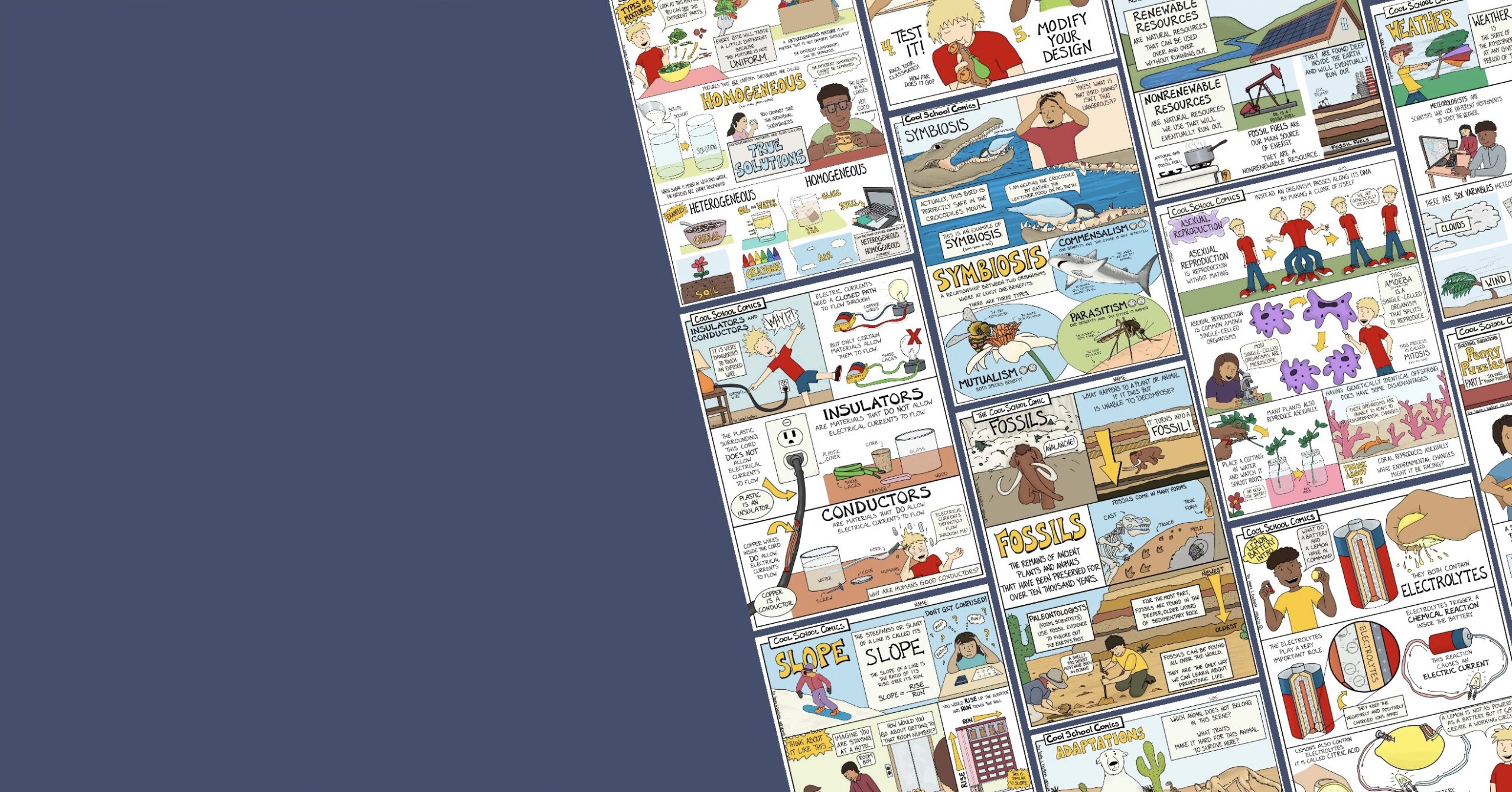
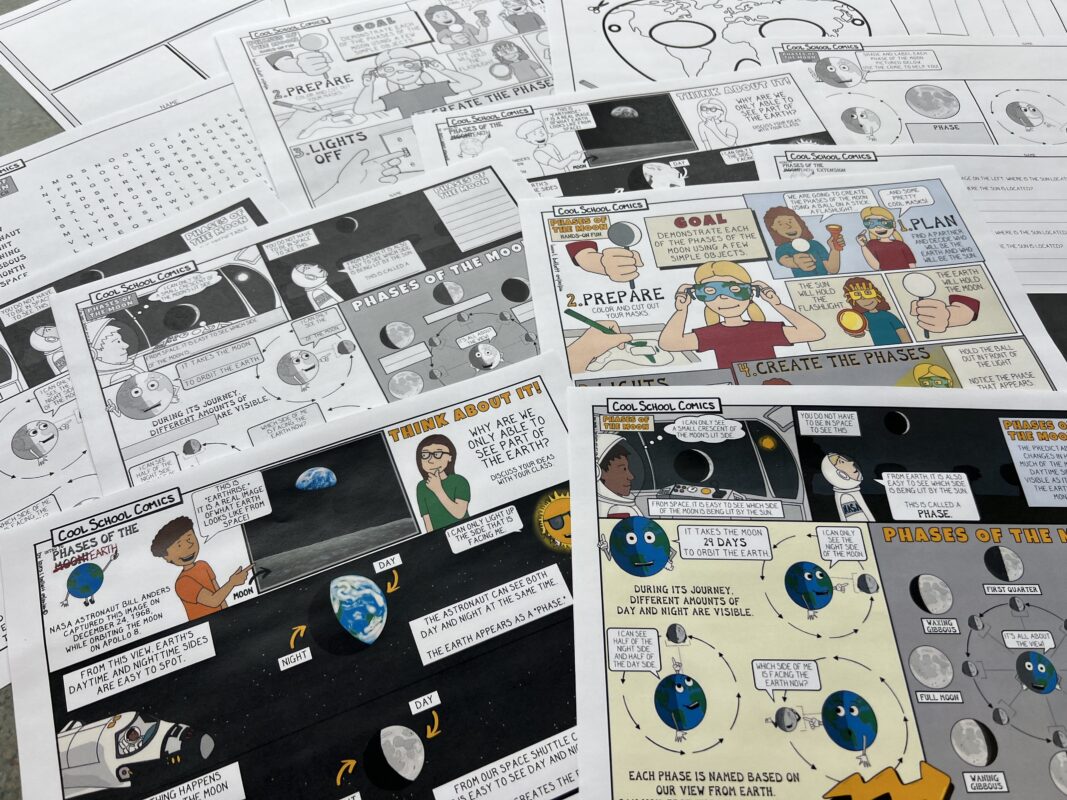
Cool School Comics are one-page, comic-style science infographics designed specifically for K–9 learners. Each comic is NGSS-aligned, print-and-go, and built for the students who struggle most with traditional science text, especially struggling readers, ELL students, students with short attention spans, and graphic novel lovers.
They’re not comic books with storylines. They’re more like visual infographics, dense with content and light on barriers.
Every comic comes with extension activities and projects, so they fit naturally into a full unit rather than sitting in isolation.
You can find them at coolschoolcomics.com!