Blog
What Causes the Phases of the Moon? Science Activity

Ditch the Moon Phases Worksheet
Struggling to get your learners to understand what causes the phases of the moon? I’ve got you covered!
From start to finish, this phases of the moon mini science lesson will not only grab their attention, but it will effectively teach the concept. Your learners will LOVE these eye-catching comics and retain the information. No struggle. No stress.
Introduce the Phases of the Moon with Earthrise
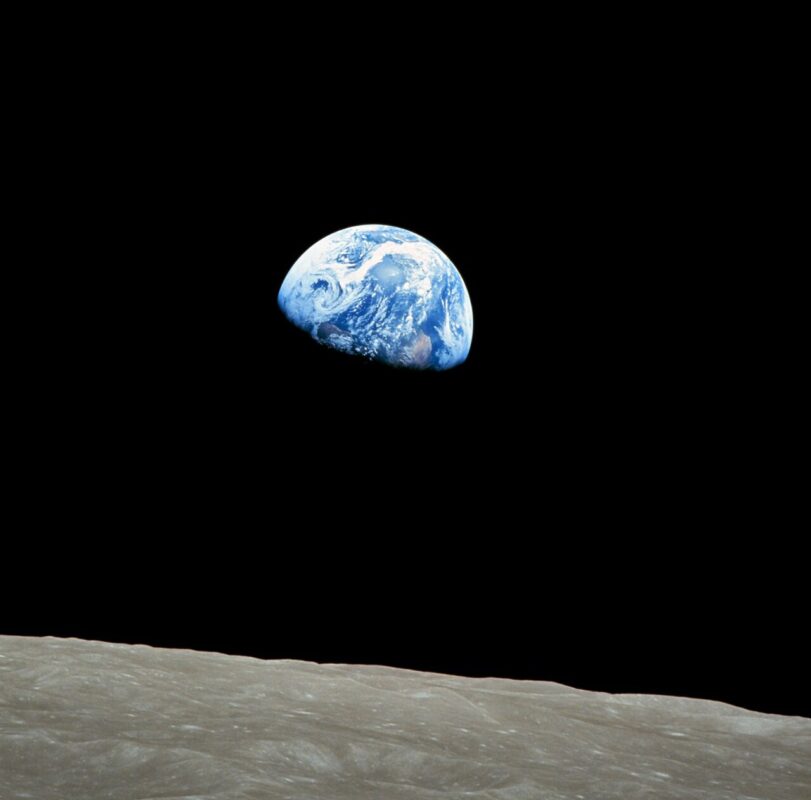
In 1968, astronaut Bill Anders captured this photograph of the Earth in the distance as the Apollo 8 spacecraft orbited the moon. Said to be one of the most influential environmental photographs ever taken, this photo is the perfect place to launch a lesson explaining what causes the phases of the moon.
I always start this lesson with this photo. I project the image on the front board and pose the question- “Why are we only seeing a portion of the Earth?”
We discuss how we are able to see both the day and night sides of the Earth. As we continue to examine this image, I guide my learners to predict where the sun is in this image.
The goal of this introduction activity is to understand that the sun is lighting up a portion of the Earth, which results in the Earth appearing as a phase. This perspective lays the foundation needed to understand why we see the phases of the moon from Earth.
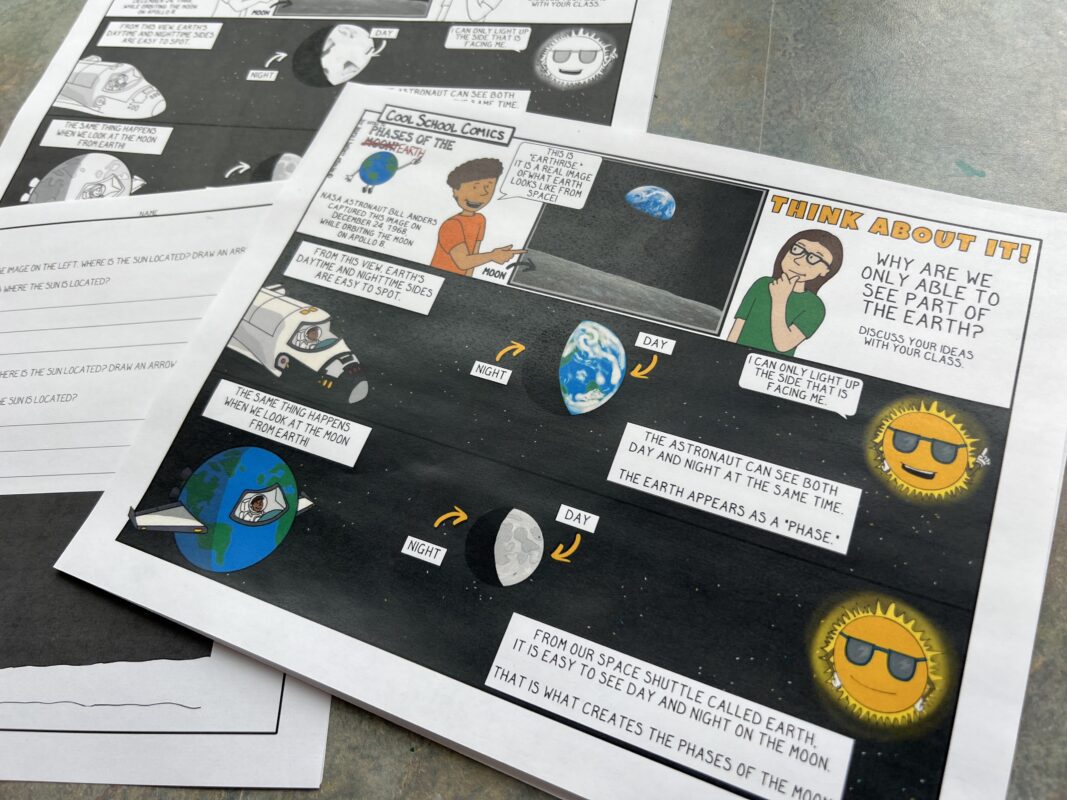
The introduction comic to the What Causes the Phases of the Moon Lesson Plan illustrates this process of examining this famous image and applying that understanding to the phases of the moon.
With the cool Earth-Shuttle, the science comic leads readers to relate the two perspectives and lays the groundwork for the rest of the lesson
Moon Phases Chart with a Twist
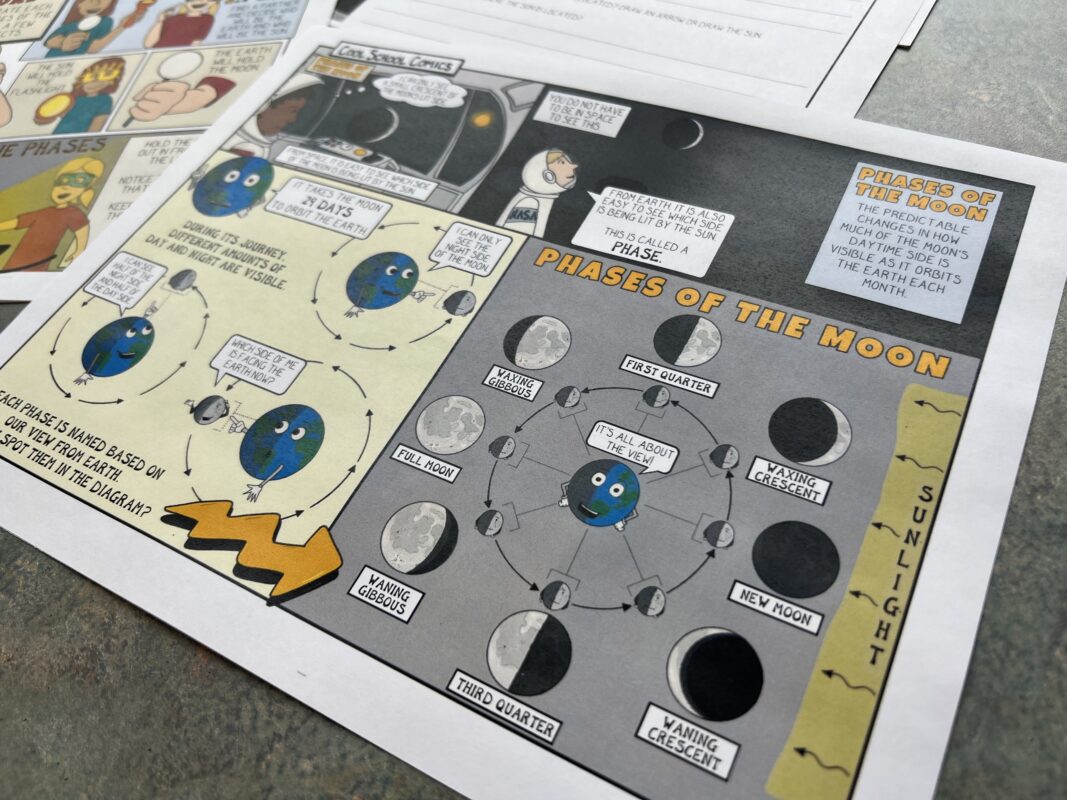
The next part of the lesson involves your everyday phases of the moon chart, but the comic delivers a little more.
In my experience, the standard diagram is tough to understand. The sunlight is always included on one side of the chart, but the light on the different phases never seems to line up. For example, when the moon is waning, all of the sunlight appears on the opposite side of the sun. This can be very confusing for learners.
To avoid this confusion, I have included illustrations of the Earth looking at the moon at different angles and explaining why these differing angles create phases. When your readers finally make it to the moon phases chart, they understand what they are looking at.
Modeling the Phases of the Moon Activity
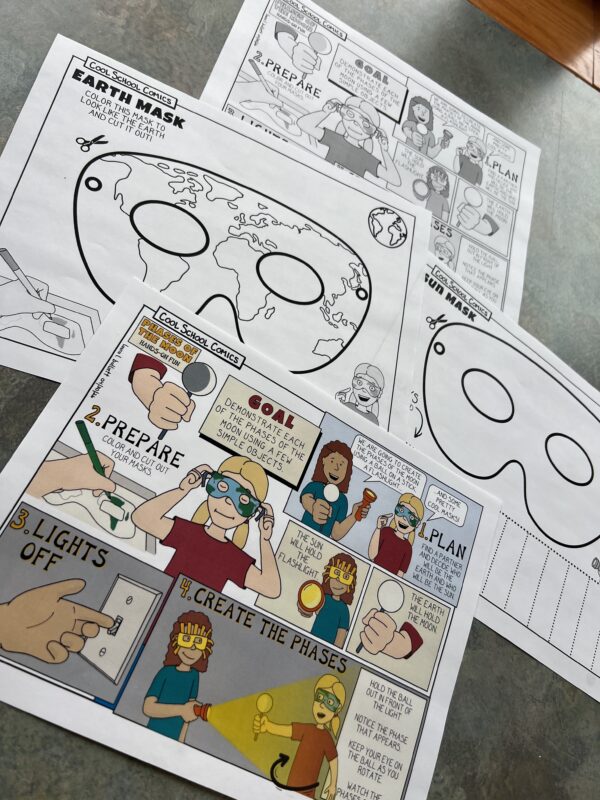
At this point, a big chunk of your science class will be understanding why we see the moon in phases, but we still need to solidify that understanding and get your hands-on learners involved. It is time for some on-your-feet fun and witnessing the process in action.
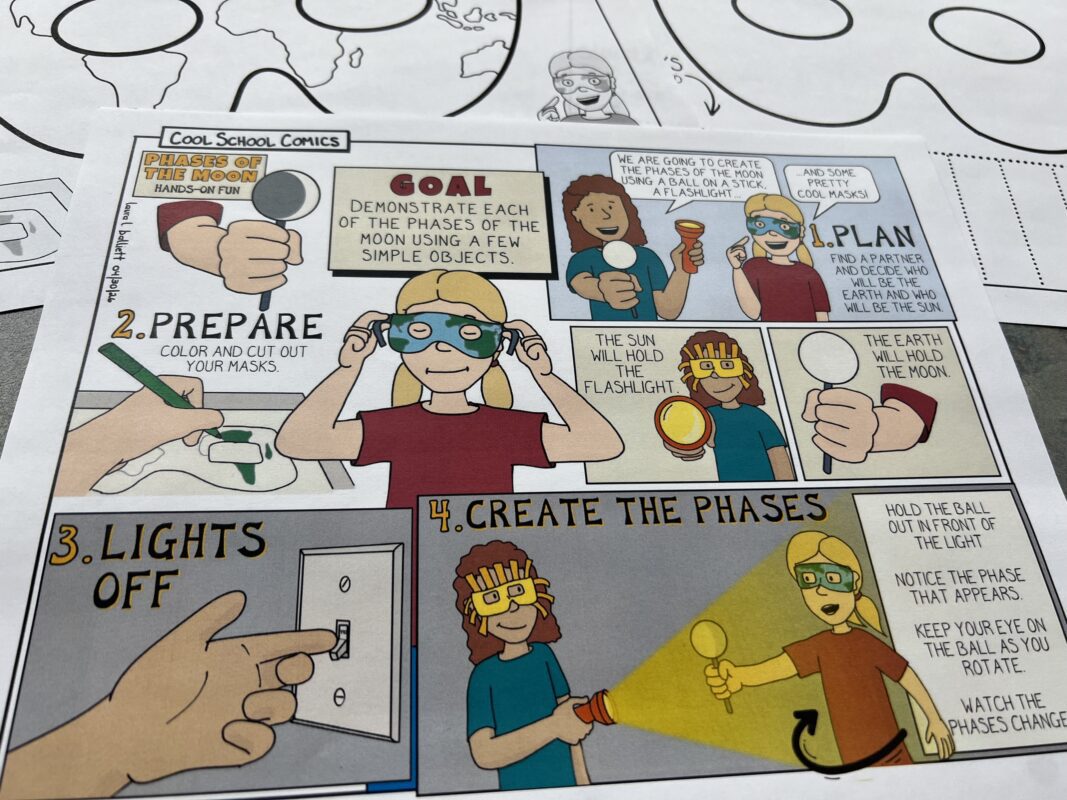
Per usual, I have created visual instructions to rope students into reading and independently attempting the activity. I don’t know about you, but in my experience, it never matters how fun the lab is; if the directions are in paragraph form, my middle schoolers will not read them. These visual instructions will grab their attention and get them reading!
Students team up and are prompted to create masks- one for the Earth and one for the sun. The masks add a little silliness to the activity.
The comic guides them through the steps of modeling each phase with the help of a white ball on a stick (ping-pong or styrofoam) and a flashlight.
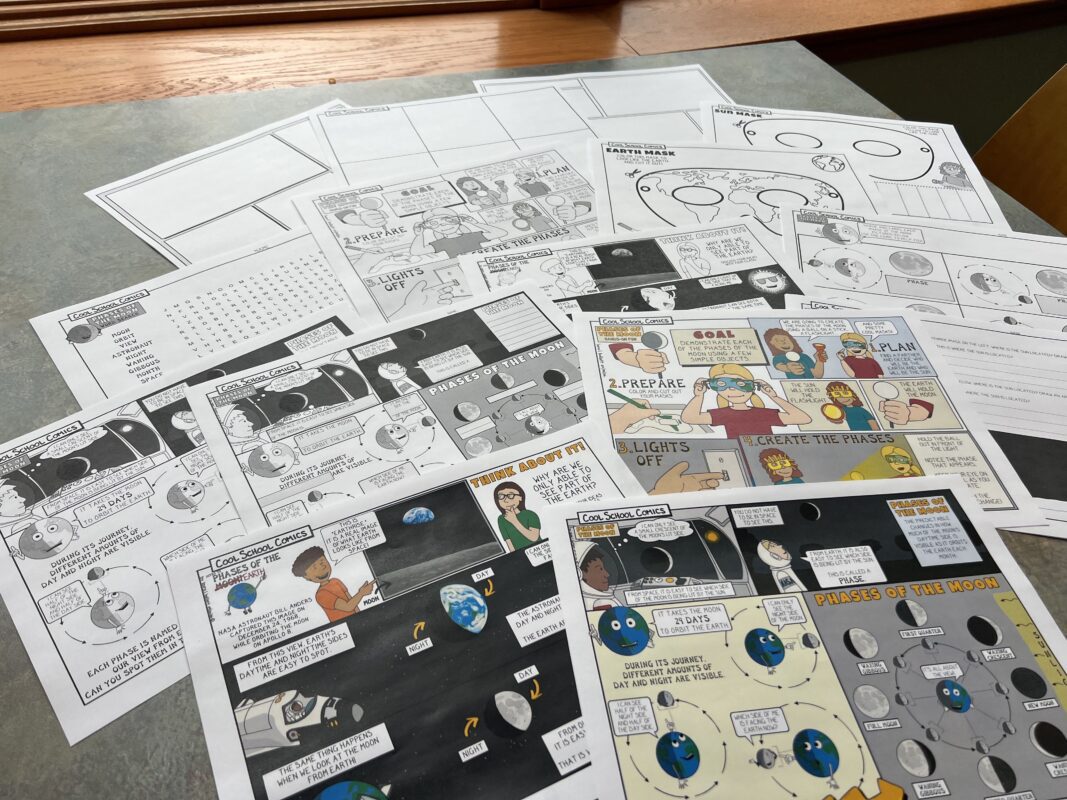
The lesson comes with all of the necessary components, even a recording sheet with follow-up questions (not pictured). It truly rounds out the lesson and solidifies understanding of the concept. Of all of the moon phase activities (i.e., Oreo cookies or posters), this one is the only one I know that really demonstrates why we see the phases of the moon.
Mini Science Lesson with a Comic Style
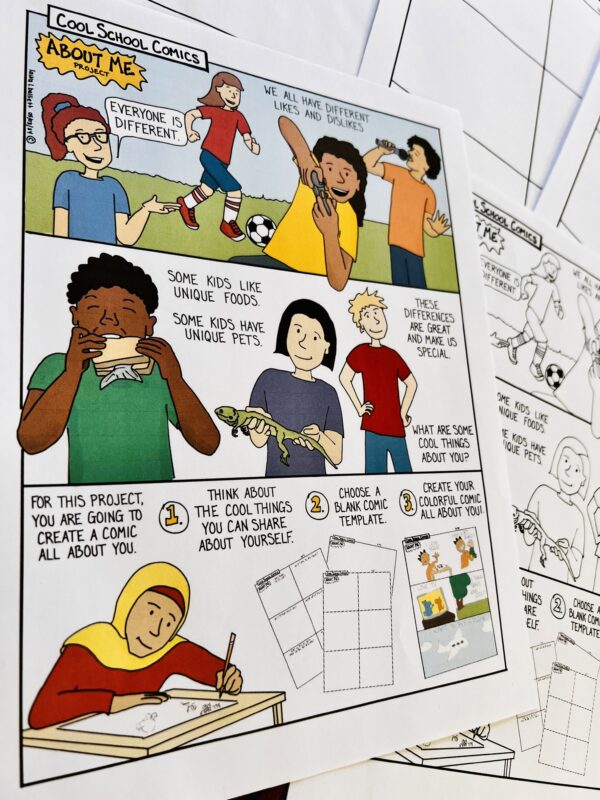
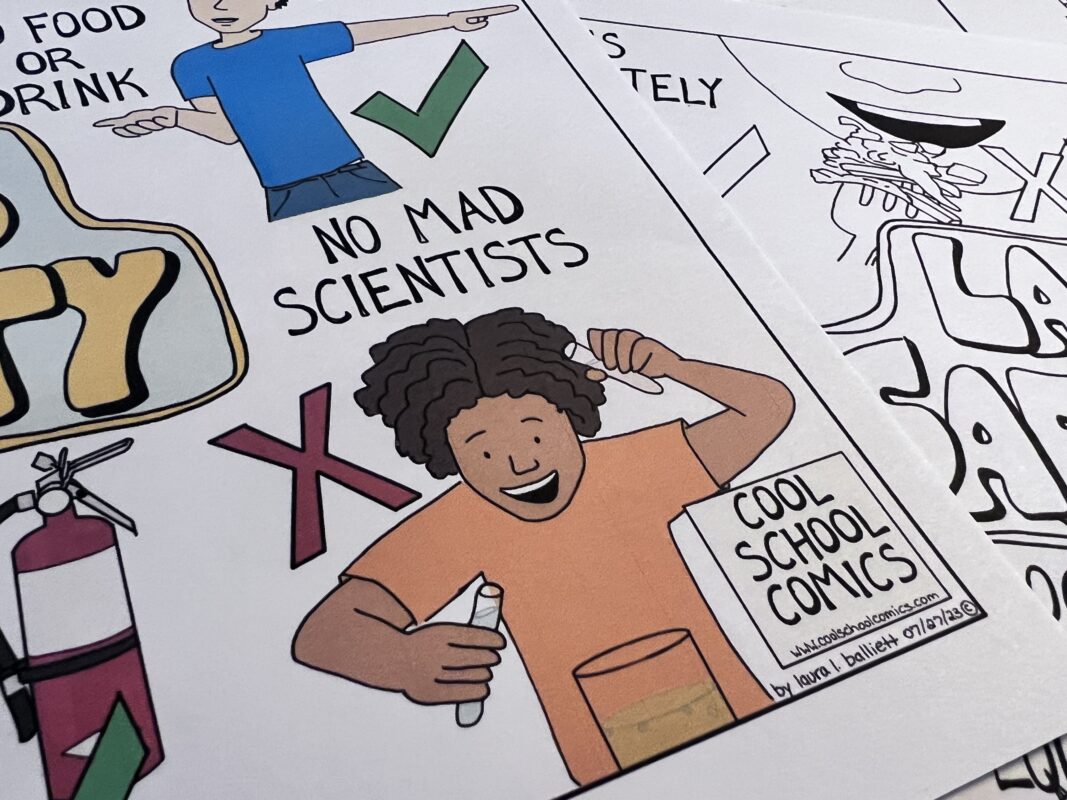
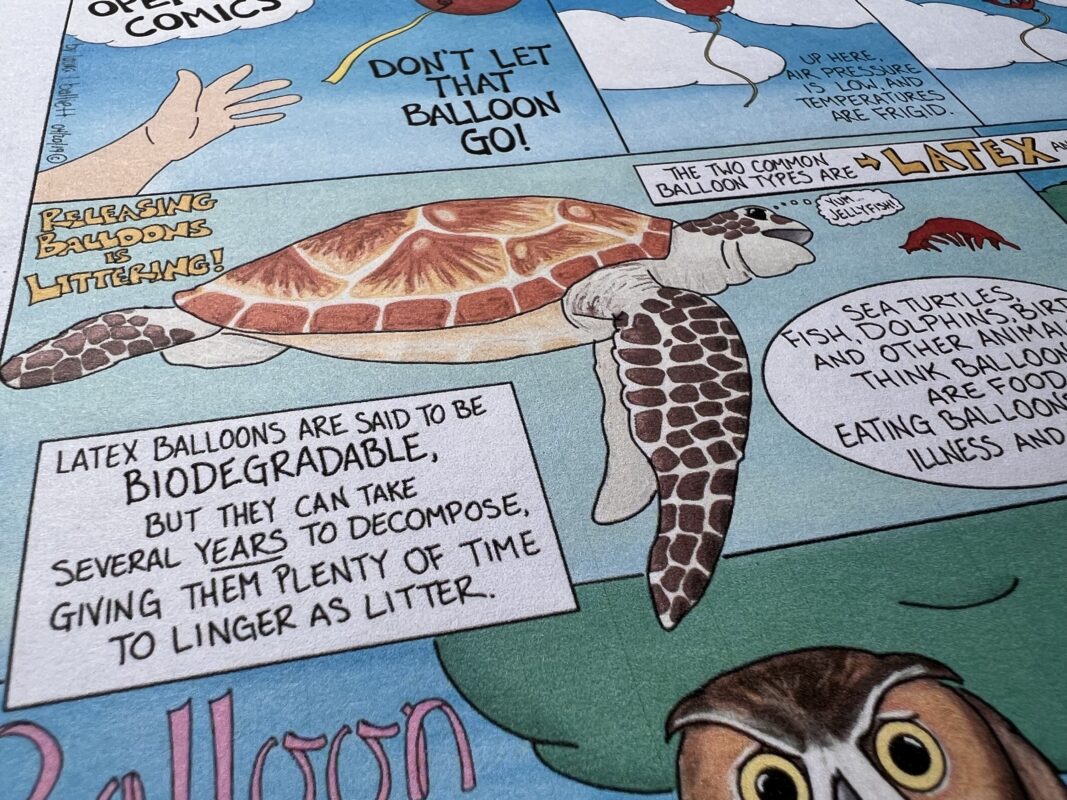
Eye-catching and engaging, teaching science with comics is how you reach today’s learners. Time and time again, I hear teachers stress over the struggles they have with getting their learners to read and get excited about science. This is science without the struggle.
If you are tired of the resistance, be it in a classroom setting or at your kitchen table for homeschool, science comics are a secret weapon when it comes to teaching. Kids love comics.
Check out this lesson and the other comics from Cool School Comics and watch the magic happen in your classroom (or kitchen).
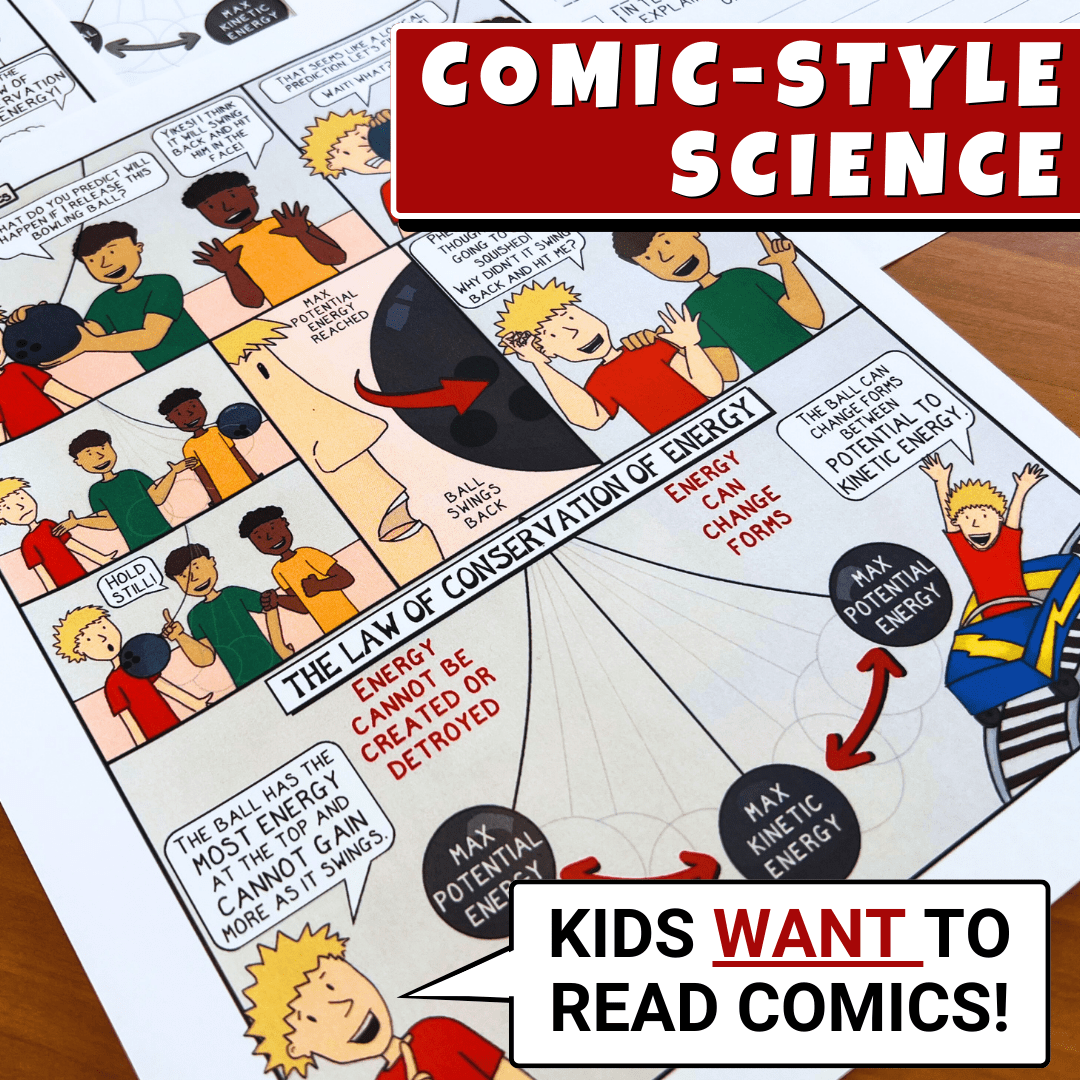
Cool School Comics delivers highly visual, comic-style science content and activities crafted to engage today’s learners. In a world of fast-paced information, these comics have the power to tackle short attention spans and the ever-bored population. Great for English language learners (ESL, ELL), graphic novel lovers, struggling readers, and everyone in between.
This is science without the struggle.